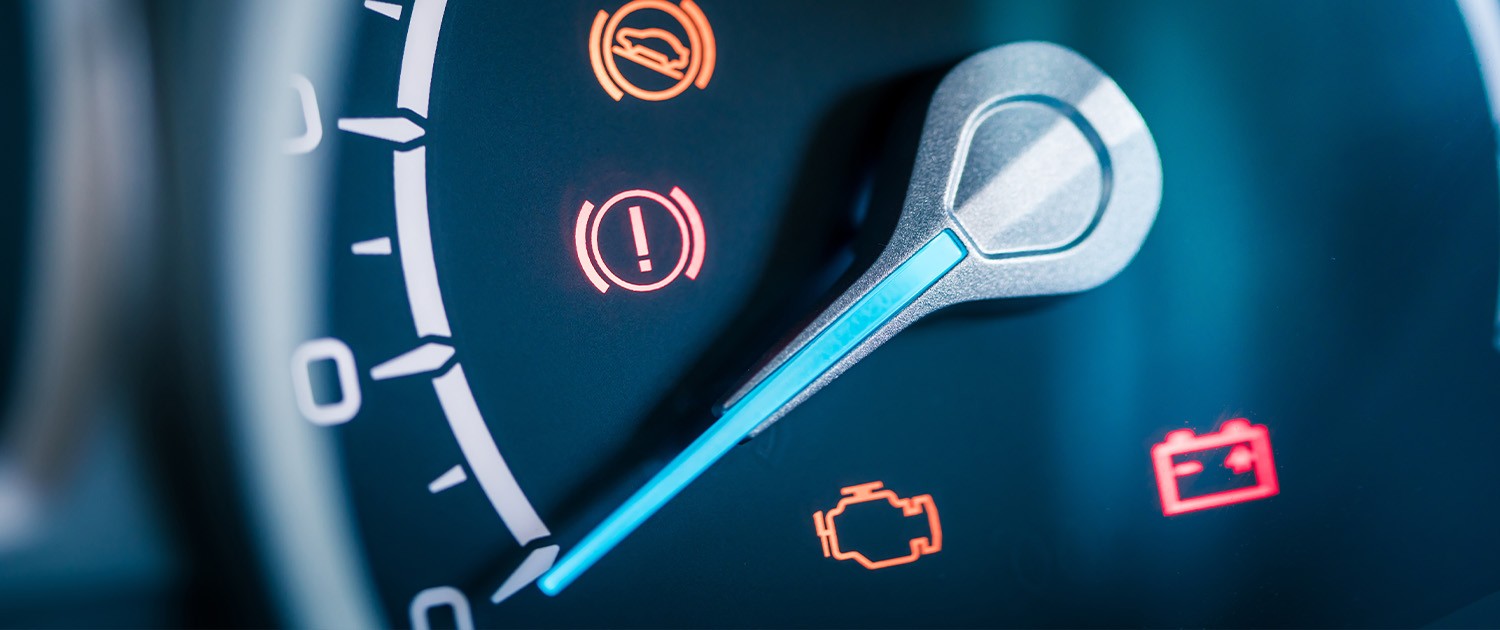
Understanding your car dashboard lights ensures you’ll know when something needs attention. Whether you're a new driver or just want to refresh your knowledge, this guide explains the most common symbols and what they mean so you can respond safely and confidently.
Modern vehicles use a colour-coded warning system to help you quickly interpret issues before they become serious problems.
Traffic light system: red, amber and green
Dashboard warning lights follow a simple traffic light system:
Green – System is active and working normally
Amber/yellow – A fault or issue needs checking soon
Red – A serious problem requiring immediate attention
Understanding this system is key to interpreting dashboard warning lights correctly and responding safely.
Common car warning lights explained
Engine management light
Also known as the ECU light, this indicates an issue within the engine or emissions system. It can range from minor faults to more serious problems affecting performance or emissions.
Battery warning light
This indicates a charging system fault. If it appears while driving, your vehicle may soon lose electrical power.
Brake warning light
This may indicate low brake fluid or a fault in the braking system. If it appears with ABS or other braking warnings, stop safely and seek assistance.
Power steering warning light
This signals a fault with the steering assistance system. Steering may become heavier and harder to control.
Airbag warning light
This indicates a fault in the airbag or seatbelt pretensioner system and should be checked urgently.
Diesel particulate filter (DPF) warning light
This indicates blockage or regeneration issues in diesel models and should be addressed promptly to avoid damage.
Coolant temperature warning light (red)
This indicates overheating. Stop immediately and allow the engine to cool.
Coolant level warning light (amber)
This indicates low coolant and should be checked soon.
Oil warning light
This indicates low oil pressure or insufficient lubrication and requires urgent attention.
Tyre pressure warning light
This indicates under-inflated tyres, which can affect safety and fuel efficiency.
ABS warning light
This indicates a fault with the anti-lock braking system. Normal braking still works, but ABS assistance is disabled.
Brake pad warning light
This indicates worn brake pads that need replacement soon.
ESP/ESC warning light
This indicates stability control issues. If flashing, the system is actively working; if constant, it may be disabled or faulty.
What to do when a warning light appears
When a warning light appears, the most important step is to stay calm and assess its severity. Check whether it is red, amber or green, and respond accordingly. Red lights usually mean you should stop as soon as it is safe, while amber lights mean you should arrange a garage check soon. Green lights simply indicate active systems and do not usually require action.
If you are unsure, consult your vehicle handbook or seek professional advice. Ignoring warning lights meaning can lead to more serious and costly repairs.
Can I drive with a warning light on?
Whether you can continue driving depends on the type of light displayed:
Critical warning lights (stop immediately)
These include:
Engine overheating (red coolant light)
Low oil pressure
Brake system failure
You should stop safely as soon as possible and seek assistance.
Warning lights (check soon)
These include:
Engine management lights
ABS warning
Tyre pressure warning
You may be able to continue driving cautiously, but you should book a garage inspection promptly.
Informational or system active lights
These include:
ESP flashing during traction control activation
Indicator lights for active systems
These are usually normal and do not require action.
How do I reset dashboard warning lights?
Some engine management lights may turn off automatically once the underlying issue is resolved. However, others require diagnostic equipment to reset.
Common methods include:
Fixing the underlying fault (most important step)
Restarting the engine after minor sensor resets
Using an OBD diagnostic tool (for advanced users or garages)
If a warning light remains on after a repair, a professional diagnostic check is recommended.
Are dashboard lights part of the MOT test in the UK?
Yes, certain dashboard warning lights can affect your MOT result. Lights related to emissions, airbags, ABS, or engine management systems may result in a fail if they indicate an active fault at the time of testing.
A permanently illuminated dashboard warning lights indicator often suggests an underlying issue that needs resolving before the vehicle is considered roadworthy.
Hopefully this article has helped you understand your car warning light meanings, so you know when to pull over and request assistance, or when to visit a garage for a check.
Dashboard warnings are designed to protect you and your vehicle. Responding quickly and correctly can prevent breakdowns and expensive repairs.
Stay protected on the road
Don’t risk being stranded due to ignored warning signs. Join GEM Motoring Assist for reliable breakdown cover and expert roadside support whenever you need it most.
Keep up to date with the latest news from GEM Motoring Assist at:
GEM Motoring Assist is a members’ motoring and road safety organisation in the UK. Our aim is to keep our members on the move… whether that’s through our breakdown recovery service or our motoring and road safety expertise.
We use essential cookies to ensure our site is safe and works properly. We also use analytics cookies to offer you a more personalised experience and to improve our site. To find out more and manage your cookie preferences, please choose ‘Manage’ to view our cookies policy.
This Cookies Policy sets out how GEM Motoring Assist (“We”), use cookies on this website.
About Cookies
A cookie is a small file that is downloaded to a device (e.g. a Computer, Tablet or Smartphone) when a website is visited. The cookie allows the website to recognise a user’s device and store information based on the user’s previous actions and preferences.
For a complete definition of cookies, please visit the Information Commissioner’s Office (ICO) website here.
Types of Cookies used
Essential Cookies
The table below explains the essential cookies We use and why.
Provider
Cookies
Purpose
GEM Motoring Assist
__RequestVerificationToken
This cookie is used to protect against Cross-Site Request Forgery (CSRF) attacks. This is set when you visit the page and is sent back to Our server whenever you submit a form in order to ensure any form submissions originated from Our site.
gemcl
We use security cookies to authenticate users, prevent fraudulent use of login credentials, and protect user data from unauthorised parties.
gem_aggr
This cookie is used to attribute your purchases with our partners.
gem_discount
This cookie is used to ensure customers receive discounts when purchasing through online advertisements.
_cookieconsent
This cookie indicates preference for the use of non-essential cookies.
Application Insights
ai_user ai_session
These cookies are used to collect information about issues, dependencies and exceptions which may occur when browsing this website. This data is purely for telematics and error detection, triage and diagnoses. For more information click here.
Analytics Cookies
The table below explains the analytics cookies We use and why.
Provider
Cookies
Purpose
Google Analytics
_ga _gid _gat AMP_TOKEN _gac_ <property-id>
Used to distinguish users. Used to distinguish users. Used to throttle request rate. Contains a token that can be used to retrieve a Client ID from AMP Client ID service. Contains campaign related information for the user. For more information on the use of Google Analytics Cookies please click here.
How to control Cookies
Information on controlling cookies using specific web browsers can be found on the Information Commissioner’s Office (ICO) website here.
Changes to our Cookies Policy
Any changes We may make to Our Cookies Policy in the future will be posted on this page. We advise that you check this page regularly to keep up to date with any necessary changes.