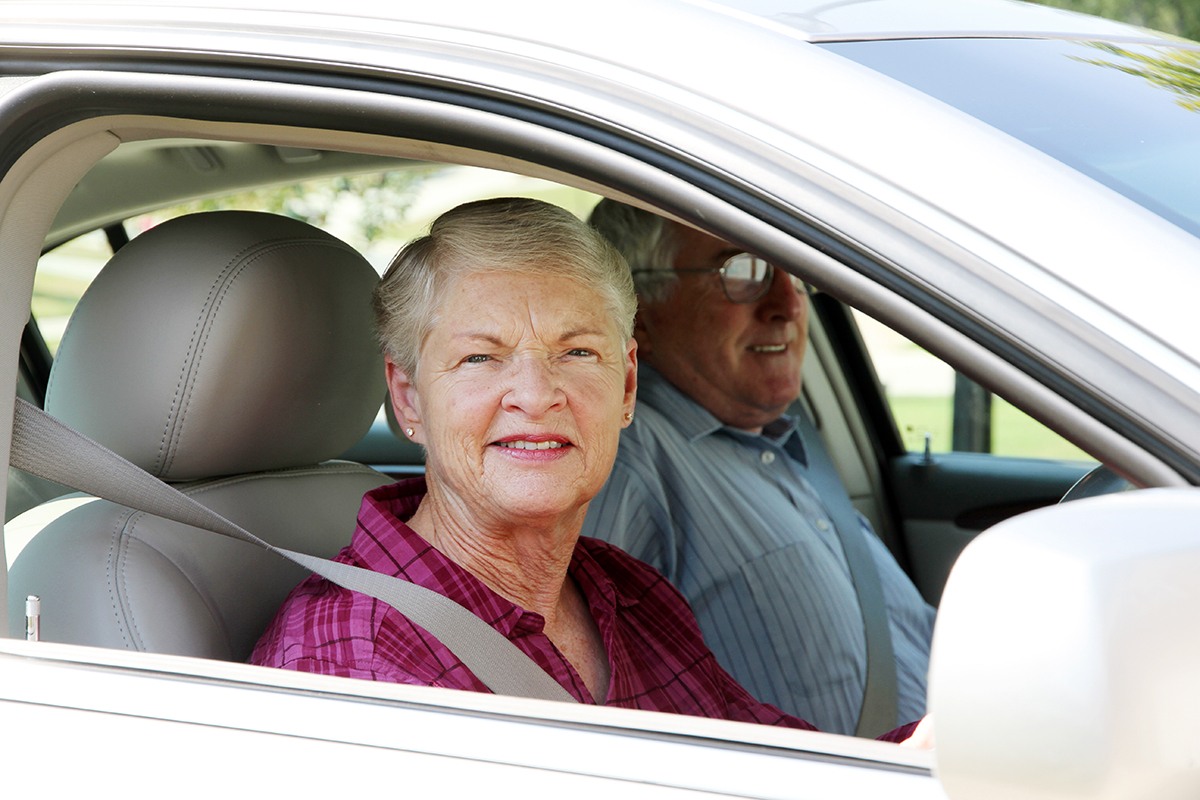
Advice from GEM Motoring Assist for concerned relatives of older drivers.
Introduction
We can all feel nervous or worried when we’re driving. As we get older, moments of worry or difficulty tend to become more frequent. It could be because other drivers are wanting to overtake, it could be because of reduced ability to see at night – or a whole host of other reasons that can make an older driver more uncomfortable and – more important – less safe.
Physical effects: what happens as you get older
As we grow older, our muscles generally become weaker, our joints stiffen and we become less and less flexible. Reflexes tend to slow down as well. The combination of these effects can make certain aspects of driving more difficult, for example turning the steering wheel, emergency braking, or even simply looking over your shoulder.
Hearing and vision will become less good, particularly night-time vision. The danger of driving with impaired hearing is that you may not hear a warning horn from another vehicle, or the siren of an approaching emergency service vehicle.
Vision
Common vision problems connected with driving include the following:Cataracts., which cloud the lens of the eye, cause vision to become blurred or hazy. Cataracts may also cause a driver to bemore sensitive to light and glare, making it more difficult to drive at night.
Macular degeneration causes us to lose the central portion of our field of vision. Without central vision it obviously becomes harder to see other cars, motorcycles or pedestrians coming toward us.
Glaucoma affects our peripheral vision. It’s a group of conditions rather than one condition, and is characterized by abnormally high pressure inside the eyeball. Reduced peripheral vision means it is more difficult to see pedestrians or vehicles approaching from the side.
The mind
As we get older, it can sometimes be hard to concentrate as effectively, and reaction times can increase. It can also become harder to make immediate decisions while driving.
Medical conditions
There are a number of medical conditions that occur more frequently in older adults, thus limiting their ability to drive.
Alzheimer’s disease is a disorder that causes memory loss, can cause slower reaction times, problems judging space and distance, and a diminished ability to plan ahead. It can also put someone at greater risk of getting lost, being confused by one-way streets, and being involved in an accident.
Arthritis involves painful joints, which can limit a driver’s ability to look in rearview mirrors and over the shoulder. Grip on the steering wheel can be reduced and it can become difficult to bend the knee to push the brake pedal.
Diabetes can damage the nerves in your hands, feet and eyes. This can slow reaction times and limit vision. If your blood sugar levels drop too low, a driver may feel dizzy or shaky, become confused or even lose consciousness.
Parkinson’s disease is a neurological condition that causes rigidity, slowed movement and tremors. These may affect a driver’s ability to turn the steering wheel and make quick movements.
Stroke is caused by an interruption in blood flow to the brain. This damages brain tissue and may cause balance problems, diminished vision and loss of muscle control on one or both sides of the body.
Medicines
Many older adults take one or more prescription medications. Prescription drugs and many over-the-counter medications can cause drowsiness or a slow reaction time, particularly when combined with other medications. As we age, we become more sensitive to these effects.
Medications that might cause drowsiness include antihistamines, sedatives, drugs that treat depression and diabetes, and strong painkillers. Check the labels of these medications to get some idea of what each one may do.
Gradual or sudden?
Just because someone is getting old doesn’t mean you should take immediate steps to encourage them to give up driving and sell the car. More useful is a sympathetic intervention from time to time that might encourage the older person to minimize dangerous situations.
Journey planning is important – even short journeys can be planned to take place in daylight when the roads are quieter.
For longer journeys, rest stops should be planned and built in.
If the prospect of making a longer journey seems daunting, especially if the older person is planning to drive alone, then encourage him or her to take a friend or relative, to share the driving if possible – or to accept a lift.
Checklist for the senior driver
Here are some useful tips to discuss with a older driver to help reduce the risk of an accident:
Keep fit. Physical fitness improves strength and flexibility, which helps such actions as turning the steering wheel and looking over your shoulder.
Get an eye test and a hearing test regularly. A GP will be the best person to advise on how frequent these tests should be.
Be familiar with the medicines you take. Ask your doctor if any of your medications could affect your driving and, if so, whether other options are available.
Check your blood sugar levels. If you have diabetes and problems managing your blood sugar, check your blood sugar level before getting behind the wheel.
Choose to drive at times of day when trafficis less busy stressful conditions.
Plan your route in advance. This allows you to concentrate on driving, not navigating.
Consider an automatic vehicle if you do not already have one.
Update your driving skills. GEM Motoring Assist’s experienced driver assessment is a perfect way to check out how you’re doing and what little habits could be put right.
Avoid alcohol when driving, as it has a greater effect on older adults
Time to give up?
This is sometimes the very painful decision. Help an older driver by identifying some of the more obvious signs:
Has he or she been involved in one or more preventable accidents, or perhaps picked up a ticket or two?
Have any passengers had cause to remark that they simply did not feel safe?
Have preferred driving speeds become a lot lower?
Has attention seemed to wander?
Are there more sudden, erratic manoeuvres than there should be?
Do reactions appear to be slower?
Are lots of other drivers sounding their horn to warn or rebuke?
Have obvious road signs, lights or directions been missed?
Possible financial benefits of selling your car
Recent research has pinpointed the alarming cost per mile of owning and running a car that dos only a low annual mileage. Generally speaking, if you drive fewer than 2,500 miles a year you would save money by selling your car and using taxis, buses or joining a car share scheme.
OK, so there may be a feeling that you’re losing your independence, but the potential savings are significant. See how the costs add up.
As an example, Mr J of Stafford was paying £300 for insurance, £120 for road tax, £150 for servicing, and £60 for breakdown cover… before he left his drive. And with soaring fuel prices, he was probably looking at a cost per mile of more than £1. By selling his car and using taxis he made an overall annual saving of £750. By the way, he retained his GEM membership!
A difficult decision
We’re offering this advice to you because of the possible difficulties you may face in trying to persuade an ageing relative to stop driving, especially if he or she does not feel ready for such a big change.
Emphasise that your prime concern is their safety (and the safety of others around them).
Help them to see their limitations
Offer positive alternatives (taxis, lfts etc), and maybe suggest how much better off they’re likely to be without the burden of running a car!
Make it quite clear that they are not alone in needing to make this kind of decision. It’s something faced by thousands and thousands of people every year.
A team effort
If you can turn it into a ‘team effort’ with appropriate advice and suggestions, then there is a much better chance that the person in question will feel happier in dealing with the life-style changes such a decision is likely to bring.
DISCLAIMER
The information on this Site is provided on the understanding that GEM Motoring Assist is not rendering legal or other advice. You should consult your own professional advisers as to legal or other advice relevant to any action you wish to take in connection with this website.
Keep up to date with the latest news from GEM Motoring Assist at:
GEM Motoring Assist is a members’ motoring and road safety organisation in the UK. Our aim is to keep our members on the move… whether that’s through our breakdown recovery service or our motoring and road safety expertise.
Join GEM for simple and straightforward, all-inclusive personal breakdown cover.
We use essential cookies to ensure our site is safe and works properly. We also use analytics cookies to offer you a more personalised experience and to improve our site. To find out more and manage your cookie preferences, please choose ‘Manage’ to view our cookies policy.
This Cookies Policy sets out how GEM Motoring Assist (“We”), use cookies on this website.
About Cookies
A cookie is a small file that is downloaded to a device (e.g. a Computer, Tablet or Smartphone) when a website is visited. The cookie allows the website to recognise a user’s device and store information based on the user’s previous actions and preferences.
For a complete definition of cookies, please visit the Information Commissioner’s Office (ICO) website here.
Types of Cookies used
Essential Cookies
The table below explains the essential cookies We use and why.
Provider
Cookies
Purpose
GEM Motoring Assist
__RequestVerificationToken
This cookie is used to protect against Cross-Site Request Forgery (CSRF) attacks. This is set when you visit the page and is sent back to Our server whenever you submit a form in order to ensure any form submissions originated from Our site.
gemcl
We use security cookies to authenticate users, prevent fraudulent use of login credentials, and protect user data from unauthorised parties.
gem_aggr
This cookie is used to attribute your purchases with our partners.
gem_discount
This cookie is used to ensure customers receive discounts when purchasing through online advertisements.
_cookieconsent
This cookie indicates preference for the use of non-essential cookies.
Application Insights
ai_user ai_session
These cookies are used to collect information about issues, dependencies and exceptions which may occur when browsing this website. This data is purely for telematics and error detection, triage and diagnoses. For more information click here.
Analytics Cookies
The table below explains the analytics cookies We use and why.
Provider
Cookies
Purpose
Google Analytics
_ga _gid _gat AMP_TOKEN _gac_ <property-id>
Used to distinguish users. Used to distinguish users. Used to throttle request rate. Contains a token that can be used to retrieve a Client ID from AMP Client ID service. Contains campaign related information for the user. For more information on the use of Google Analytics Cookies please click here.
How to control Cookies
Information on controlling cookies using specific web browsers can be found on the Information Commissioner’s Office (ICO) website here.
Changes to our Cookies Policy
Any changes We may make to Our Cookies Policy in the future will be posted on this page. We advise that you check this page regularly to keep up to date with any necessary changes.