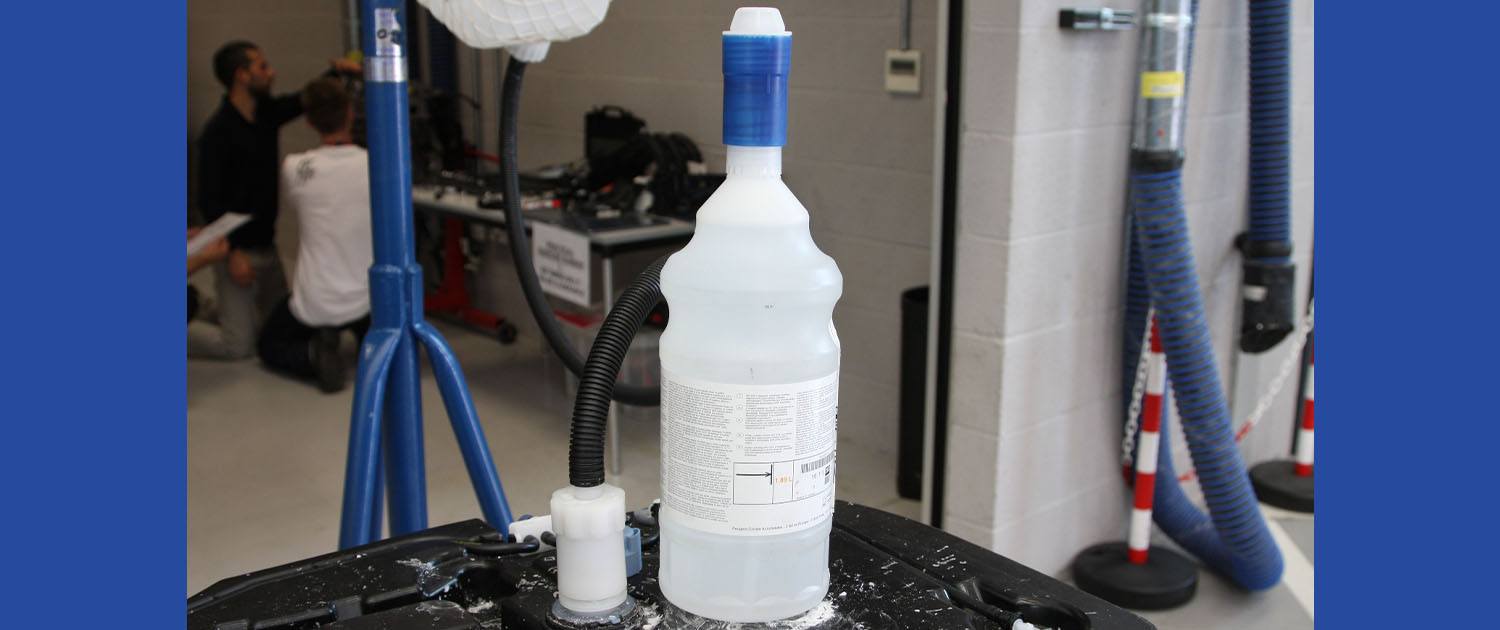
Should you own or lease a modern Euro 6 diesel car, you may have to consider another important fluid. If you've ever wondered "What is AdBlue?", it is a diesel emissions fluid used to help modern vehicles reduce harmful exhaust gases and comply with emissions regulations.
Diesel Emission Fluid (known by its trade name, AdBlue) is mainly made from purified water and urea. Although harmless when used correctly, it can cause significant issues if handled incorrectly.
AdBlue at a glance
Used in most Euro 6 diesel cars
Injected into the exhaust system, not the engine
Typical consumption is around 1 litre every 600 miles
If the tank runs empty, your car may not restart
Helps reduce harmful NOx emissions
What is the AdBlue system?
AdBlue fluid is a vital part of the car's Selective Catalytic Reduction (SCR) technology. The fluid is not injected into the engine but the exhaust system. This is performed automatically to reduce harmful NOx exhaust gases from polluting the air. Many cars will display an amber warning light on their fascias, should there be an issue, the meaning of which must be heeded, by consulting the owner's manual. These include top-up reminders.
How does the AdBlue system work?
When AdBlue is injected into the hot exhaust system, the heat present causes it to evaporate, leaving ammonia and carbon dioxide behind. As the exhaust gases flow into a catalytic converter within the exhaust system, the damaging NOx content reacts with the ammonia to form innocuous nitrogen and water.
How much AdBlue should I add?
Most drivers dose additional AdBlue, when warned by the AdBlue warning light on their dashboard. Typically, this gives plenty of warning with a mileage countdown. Some garages do so at service time, anyway.
The cost of AdBlue varies depending on where it is purchased. Filling stations with AdBlue pumps are often cheaper than buying smaller retail bottles.
When considering AdBlue consumption, driving technique plays a big part. The harder you drive, the more AdBlue is used. Typically, expect 1.0-litre to be consumed every 600 miles.
Can You Drive Without AdBlue?
Many drivers experiencing AdBlue problems ask whether they can continue driving without topping up the system.
While you may be able to continue driving temporarily after a warning appears, allowing the tank to run empty can cause significant issues:
The vehicle may refuse to restart
Dashboard warnings may remain active
Diagnostic tools may be required
Repair costs can increase
For this article, we shall consider issues that are caused by driver error, rather than those arising from wear and tear.
If you allow the AdBlue tank to run empty, the engine is unlikely to restart, even after you have refilled the tank. It may not be possible to reset the AdBlue warning afterwards without professional diagnostic equipment.
You will cause serious damage, by dosing AdBlue in the wrong place. Never add it to the fuel tank, cooling system, or oil sump. Be familiar with the AdBlue tank's location. Spillages are avoidable, by using a suitable bottle.
Never overfill the system, either. This situation can create a vacuum within the tank that prevents the AdBlue from being injected into the exhaust. Consequentially, the AdBlue light may remain illuminated after filling. The AdBlue pump and circuitry are located on top of the tank in some cars. Overfilling, therefore, risks moisture contamination that can damage the electrical system.
AdBlue and Cold Weather
AdBlue can freeze at approximately −11°C, which sometimes causes concern during winter conditions.
Modern vehicles are designed with heated tanks and delivery systems to prevent freezing from becoming a major issue. In most cases, the system will begin operating normally once temperatures increase.
However, repeated short journeys in cold conditions may contribute to some AdBlue problems, particularly if sensors or injectors are already deteriorating.
Does AdBlue Expire?
The AdBlue system cannot work correctly with out-of-date fluid, which has a finite shelf life. Never use AdBlue after the bottle's expiry date has passed and, unless you cover very high mileages, do not stockpile large quantities at home.
AdBlue has a finite shelf life and using out-of-date fluid can contribute to AdBlue problems and poor system performance.
Never use fluid after its expiry date and avoid storing large quantities unless you cover high annual mileage.
Ultra-violet light speeds up AdBlue’s deteriorationand this can damage your exhaust system’s delicate Selective Catalytic Reduction catalyst. Therefore, buying bottles that have been sitting outside a petrol forecourt may not be a good idea. Instead, look for bottles that have been stored indoors, or in the dark.
AdBlue Crystallisation and How to Store It
AdBlue can crystallise when exposed to air or after spillages dry out. The white residue can clog components and potentially create performance issues.
To avoid crystallisation:
Store bottles indoors and away from direct sunlight
Keep containers sealed tightly
Avoid contamination with fuel or water
Clean spillages immediately
Do not use old or damaged containers
Proper storage also helps avoid unnecessary cost of AdBlue increases caused by waste and system contamination.
Did you know?GEM membership includes our exclusive quarterly motoring magazine, Good Motoring, which is delivered directly to our members' doors four times a year. If you enjoy motoring magazines, you're sure to find Good Motoring an excellent read every quarter.
Request your free sample copy of Good Motoring magazine by emailing memberservices@motoringassist.com, providing your full postal address.
By requesting a free copy of Good Motoring, you consent to us using your postal address for this purpose. Your details will not be kept on file thereafter.
We use essential cookies to ensure our site is safe and works properly. We also use analytics cookies to offer you a more personalised experience and to improve our site. To find out more and manage your cookie preferences, please choose ‘Manage’ to view our cookies policy.
This Cookies Policy sets out how GEM Motoring Assist (“We”), use cookies on this website.
About Cookies
A cookie is a small file that is downloaded to a device (e.g. a Computer, Tablet or Smartphone) when a website is visited. The cookie allows the website to recognise a user’s device and store information based on the user’s previous actions and preferences.
For a complete definition of cookies, please visit the Information Commissioner’s Office (ICO) website here.
Types of Cookies used
Essential Cookies
The table below explains the essential cookies We use and why.
Provider
Cookies
Purpose
GEM Motoring Assist
__RequestVerificationToken
This cookie is used to protect against Cross-Site Request Forgery (CSRF) attacks. This is set when you visit the page and is sent back to Our server whenever you submit a form in order to ensure any form submissions originated from Our site.
gemcl
We use security cookies to authenticate users, prevent fraudulent use of login credentials, and protect user data from unauthorised parties.
gem_aggr
This cookie is used to attribute your purchases with our partners.
gem_discount
This cookie is used to ensure customers receive discounts when purchasing through online advertisements.
_cookieconsent
This cookie indicates preference for the use of non-essential cookies.
Application Insights
ai_user ai_session
These cookies are used to collect information about issues, dependencies and exceptions which may occur when browsing this website. This data is purely for telematics and error detection, triage and diagnoses. For more information click here.
Analytics Cookies
The table below explains the analytics cookies We use and why.
Provider
Cookies
Purpose
Google Analytics
_ga _gid _gat AMP_TOKEN _gac_ <property-id>
Used to distinguish users. Used to distinguish users. Used to throttle request rate. Contains a token that can be used to retrieve a Client ID from AMP Client ID service. Contains campaign related information for the user. For more information on the use of Google Analytics Cookies please click here.
How to control Cookies
Information on controlling cookies using specific web browsers can be found on the Information Commissioner’s Office (ICO) website here.
Changes to our Cookies Policy
Any changes We may make to Our Cookies Policy in the future will be posted on this page. We advise that you check this page regularly to keep up to date with any necessary changes.